Context Engineering Replaced Prompt Engineering. Now What?
Prompt engineering aged out. Context engineering is the new AI discipline — but without a Company Brain underneath, the stack still runs on empty.

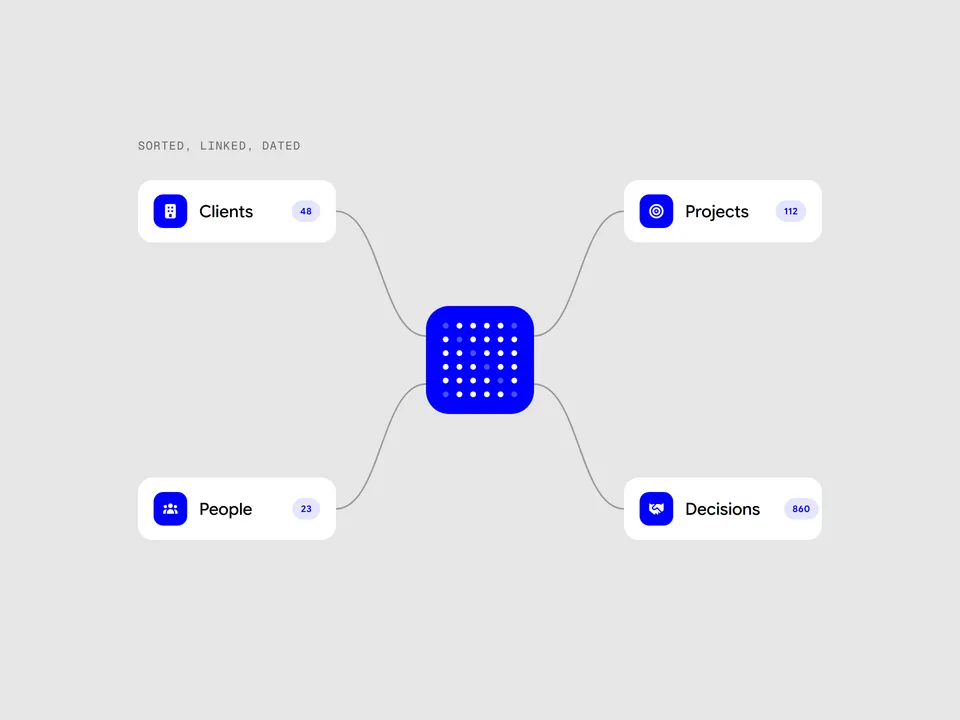
Table of Contents
- What Context Engineering Actually Means — and What It Doesn’t
- The Engineering Stack That Keeps Growing
- Why Do Enterprise AI Pilots Keep Failing?
- The Isolated Tool Problem
- Why Context Engineering Alone Isn’t Enough — The Company Brain
- What This Looks Like Across the Stack
- Is the Market Reading the Same Signal?
- What to Actually Build Next
- Frequently asked questions
The shift is visible in how AI teams work. In July 2026, Anthropic reported removing more than 80% of the system prompt for its newest Claude Code models without reducing performance on coding evaluations (Techstrong.ai). Careful prompt wording matters less than it did. What the model can see matters more.
What Context Engineering Actually Means — and What It Doesn’t
Context engineering is the discipline of designing what information an AI model has access to when it generates a response. Not how the question is phrased — what the model knows when it answers. It covers which documents surface, what memory persists between sessions, which tool outputs appear in the context window, and in what order.
The distinction from prompt engineering maps cleanly: prompt engineering crafts the question; context engineering builds the library the model draws from when answering. Where prompt engineering operates at the interaction level — one query, one response — context engineering operates at the infrastructure level, shaping every interaction the model will ever handle.
The discipline crystallized when Andrej Karpathy argued that “prompt engineering” understated the real work in serious AI applications, and the more precise term spread fast. Practitioners have kept extending the stack since.
The Engineering Stack That Keeps Growing

One common way to describe the stack in 2026 extends well past context. The names below are informal labels, not an official standard:
- Prompt engineering — How you phrase the instruction. Table stakes by now.
- Context engineering — What the model sees: documents, memory, tool outputs, in the right form at the right time.
- Harness engineering — The surrounding system: workflow orchestration, permissions, evaluation.
- Loop engineering — Autonomous systems that prompt the model and interpret results, rather than humans prompting directly.
- Verification engineering — Feedback systems that allow AI to detect and correct its own errors rather than silently producing confident wrong answers.
Each stage is a genuine improvement on the one before it. Each one also depends entirely on the quality of whatever sits below it.
A team optimizing its prompts in 2026 is working on a layer the field has already moved past. A team optimizing its context pipelines is working on a layer that will look the same way within a year. The stack keeps growing. The underlying requirement stays constant.
Why Do Enterprise AI Pilots Keep Failing?
The bottleneck is often the organizational context, not the model. Several studies point the same way. MIT NANDA found about 95% of generative AI pilots at companies failing (Fortune). Gartner’s April 2026 survey of 782 I&O leaders found only 28% of AI use cases fully succeed and meet ROI expectations (The Register). And only 7% of enterprises say their data is completely ready for AI, according to Cloudera and HBR Analytic Services. For the full causes, see why AI projects fail.
Models improved every quarter while these pilots failed. Better models cannot generate organizational context from nothing.
The blind spot is this: leaders see AI as a way to make existing work faster, so they bolt new tools onto processes built for a different era. The gap is not in the tools. The gap is in the organizational substrate those tools are trying to run on.
The Isolated Tool Problem
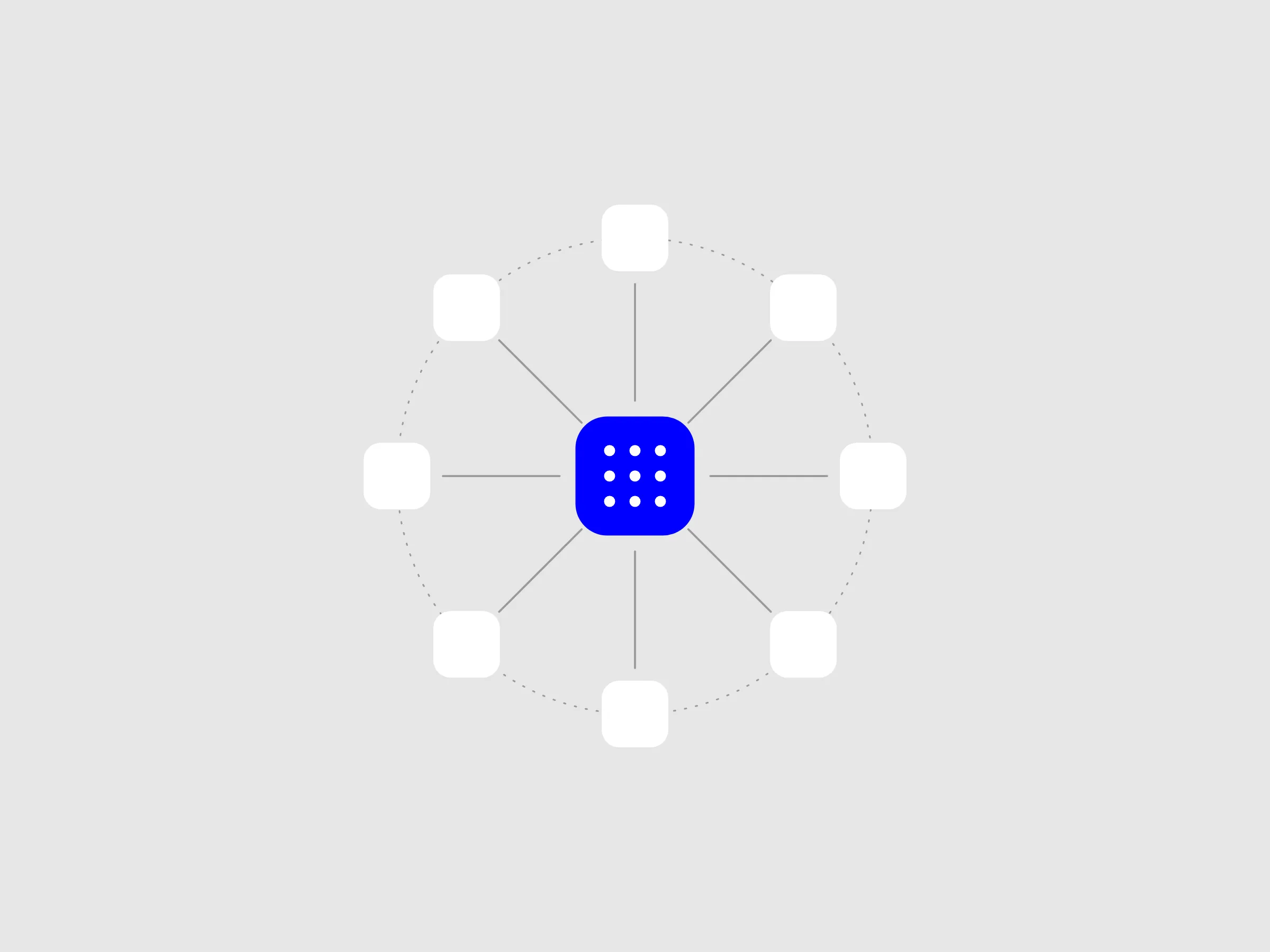
Consider what happens when AI tools share no organizational memory. A team uses one tool for coding, a second for debugging, and a third for automation. Every tool acts like an isolated employee. One assistant forgets what the other just learned.
Every organization has seen the human version. Two teams build parallel solutions because neither knows the other team is working on the same problem. A vendor negotiation starts from scratch because the person who ran the last one took their notes when they left. A policy decision gets made three times in five years because nobody recorded why the first two were reversed.
AI tools, plugged in without a shared memory layer, replicate this pattern at speed. Better prompts don’t solve it. Tighter context pipelines on a per-tool basis don’t solve it. Each optimized tool still operates in isolation from every other tool, from the previous session, from the decision made last quarter. The gap is organizational. It requires an organizational fix.
Why Context Engineering Alone Isn’t Enough — The Company Brain
Context engineering, practiced rigorously, improves what a model sees for any given task. A Company Brain determines whether what the model sees is worth seeing.
A Company Brain is a living, queryable record of how the business operates: its decisions, processes, and institutional context. A wiki captures what existed when someone last updated it. A Company Brain stays current as the business changes. For the full comparison, see Company Brain vs wiki.
The distinction matters most for context engineering. The most sophisticated context pipeline in the world retrieves from whatever source exists. If the source is a wiki last updated eight months ago, the context it delivers is eight months stale. If organizational knowledge lives entirely in people’s heads, Slack threads, and the memory of whoever has been there longest, the context pipeline has nothing real to work from.
Y Combinator’s Summer 2026 requests for startups reportedly named the company brain as a category, describing it as a map of how a company works that AI automation can run on. We could not confirm that wording on YC’s own page, so we paraphrase. See the Company Brain market for what is confirmed. Context engineering can be as sophisticated as a team can build, but it still needs something real to retrieve.
What This Looks Like Across the Stack
The clearest way to see why context engineering alone hits a ceiling is to compare approaches:
| Approach | What It Improves | What It Still Misses |
|---|---|---|
| Better prompt engineering | Single-interaction quality | Context across sessions and tools |
| Context engineering | What the model sees per task | Shared organizational memory |
| RAG retrieval | Document findability | How the business actually works |
| Fine-tuning | Model behavior on trained patterns | Live, current organizational context |
| A Company Brain | Shared organizational memory — the substrate | Not a layer added on top; the foundation everything else runs on |
Each approach in the table is real and useful. Each one also assumes there is something worth retrieving. The Company Brain is not one more approach competing with the others — it is the organizational memory layer that makes the others function at the business level.
Is the Market Reading the Same Signal?
Yes. Engram emerged from stealth on June 23, 2026 with $98 million from General Catalyst, Kleiner Perkins, Sequoia Capital, and others, with Andrej Karpathy among its angels, to build AI that knows your organization (PR Newswire). Other startups use the same label. The Company Brain market lists who is building what, and which claims we could confirm.
What to Actually Build Next
The engineering discipline will keep evolving. After verification engineering will come something else — multi-agent coordination, autonomous process redesign, or a frame that doesn’t have a name yet. The stack is not finished.
What does not change at any stage: every layer of the stack operates on organizational information. That information either exists in a form AI can use — current, structured, connected — or it exists the way most organizational knowledge actually does: in someone’s head, in a thread from last year, in the memory of whoever has been there longest.
The practical entry point is a mapping of how the business actually works: the decisions, the processes, the “we tried that and here’s why it didn’t work.” At Superstate, mapping is free and begins with a sixty-minute meeting. It produces the first version of a Company Brain. How to build a Company Brain covers the steps. The goal at this stage is not completeness. It is existence. An organizational memory that exists and updates is categorically different from knowledge that lives in people who might leave next quarter.
The bottleneck in AI has moved past models, past prompts, and now past context. It will keep moving. The companies compounding through each new stage of the stack are the ones who recognized early that every discipline requires the same foundation: organizational memory that lives in a system, not in people. Build the substrate. Everything else can run on top of it.
Frequently asked questions
What is context engineering in AI?
Context engineering is the discipline of designing what information an AI model has access to when it generates a response: which documents, memory, tool outputs, and organizational data appear in its context window, and when. It operates at the infrastructure level, building the knowledge systems that serve every AI interaction, rather than crafting better wording for individual queries. It is distinct from prompt engineering, which focuses on how instructions are phrased within a single interaction.
How is context engineering different from prompt engineering?
Prompt engineering focuses on how you communicate with an AI model: the phrasing, structure, and instructions of individual queries. Context engineering focuses on what the model knows when it answers: the documents, memory, and organizational data it draws from across all tasks. Prompt engineering improves one interaction at a time; context engineering builds the knowledge infrastructure that shapes every interaction.
Why do enterprise AI pilots keep failing despite better models?
Often the bottleneck is organizational context, not model quality. MIT NANDA found about 95% of generative AI pilots at companies failing, and only 7% of enterprises say their data is completely ready for AI. A better model reading stale or missing business context still gives confident answers that do not reflect how the business works.
What is a Company Brain and why does the AI stack need one?
A Company Brain is a living, queryable record of how a business operates, including its decisions, processes, and institutional context. Every layer of the AI stack, from context to loops to verification, works on organizational information. Without a Company Brain, that information lives in people’s heads and old threads, and the stack guesses.
How do companies start building a Company Brain?
Start by mapping how the business actually works: its key processes, decisions, and the context that exists only in people’s heads or scattered across tools. The first version does not need to be complete; it needs to exist and stay current as the business changes.

Want to know more about what we do? Visit the Superstate website.