Company Brain for SMBs: Do You Need One, and What Does It Take?
Does a 20–200-person company need a Company Brain? Why the enterprise playbook fails smaller firms, and how to size and start one at your scale.

Table of Contents
- Does a 20–200-person company actually need a Company Brain?
- Why doesn’t the enterprise playbook transfer to smaller companies?
- What are the three assumptions the enterprise playbook makes, and why can’t SMBs afford them?
- What do smaller companies have going for them?
- What does building one look like at SMB scale?
- How do you size a Company Brain to your business?
- What does it take with a partner like Superstate?
- Start with the question, not the tool
- Frequently asked questions
Enterprise examples make Company Brains look like a big-company project. Stripe built Kai, an internal AI agent that more than 10,000 employees use every week, and its engineering team built it from scratch instead of buying. If that makes a 40-person business owner want to copy the playbook, stop first. That build stood on a company with its own engineers, its own data platform and years of written internal knowledge. Most smaller companies have none of the three.
This post explains what a Company Brain is worth at your size, which enterprise assumptions break, and how to size and start one. For the full build method, read the pillar guide, how to build a Company Brain.
Does a 20–200-person company actually need a Company Brain?
A Company Brain is a living, queryable record of how the business works: its clients, rules, decisions and the reasons behind them, kept in one place that people and AI tools can both use.
You need one when at least two of these are true:
- Your AI tools give generic answers. ChatGPT or Copilot writes a fluent proposal that could have come from any competitor, because it does not know your prices, your exceptions or your tone.
- New hires learn the job by asking around. Onboarding runs on “ask Maria” because the real process is not written anywhere.
- One person leaving would hurt. If your best account manager quit tomorrow, some client rules would leave with her.
- The same question gets five answers. Pricing exceptions, approval paths and client rules depend on who you ask.
- You want AI agents to do real work. An agent that drafts offers, answers clients or chases invoices needs to know how your company does those things.
Below about 20 people, the owner often still holds the whole business in their head and can answer every question directly. A few good documents may be enough at that stage. Above that, the knowledge spreads across more heads than any one person can reach in a day. That is where a Company Brain starts to pay. (For a longer self-test, see how to tell if you need a Company Brain or better documentation.)
Why doesn’t the enterprise playbook transfer to smaller companies?
Look at the enterprise knowledge tools on the market. Most of them connect to Google Drive, Confluence, SharePoint or a data warehouse, index what is there, and make it searchable. They assume a documented source exists.
For a 40-person distributor, a 30-person accounting firm or a 25-person agency, that assumption is often wrong. Take a typical picture (an illustrative example, not a client case): the wiki has 14 pages, nine of which nobody has opened in a year. The real knowledge (how pricing exceptions get approved, why one client group is handled differently, which number to trust when the CRM and the accounting system disagree) lives in three people’s heads. Usually the same three people who are already overloaded.
Buy an enterprise tool, point it at a chat workspace and a shared Drive folder, and you get a search engine on top of gaps. The brain reflects exactly what was written down. If pricing decisions happened in hallway conversations and email threads, they stay invisible to every tool that indexes the folder.
What are the three assumptions the enterprise playbook makes, and why can’t SMBs afford them?
Assumption 1: Your knowledge is already captured somewhere.
Enterprise teams work with years of written processes, recorded decisions and handover notes. An internal knowledge agent at that scale indexes documentation that already exists.
Most small business knowledge lives in the same heads it always has. When a tool indexes what is actually there (a handful of onboarding docs, a process sheet from three years ago, a shared folder nobody organized), the result is a brain that knows less than the person who set it up.
Assumption 2: Someone on your team owns this full time.
Large companies give these projects dedicated people: knowledge managers, data engineers, an internal platform team. Stripe’s Kai was built by its own engineering organization.
The typical 30-person business has no spare engineers. The person closest to the role is also handling vendor talks, running onboarding and covering for whoever is out this week. Hand that person a system that needs manual upkeep, and it goes stale within a quarter.
Assumption 3: The problem is access, not capture.
Enterprise tools solve a retrieval problem: the knowledge exists, but it is spread across dozens of systems. The brain becomes a better way to find what is already there.
In most smaller companies, the problem is different. The knowledge is not in any system. Better retrieval on top of nothing returns nothing. Companies see the gap, reach for the tool an enterprise would use, and stall, because the real blocker is the step before any tool: finding out what the company actually knows and getting it into a system.
What do smaller companies have going for them?
A Company Brain is not harder to build for a small business. In some ways it is easier, if the method fits the starting point.
- The knowledge fits in a few heads. Processes are not spread across 12 business units. They live with four or five senior people, and you can reach all of them in a week.
- The owner can check the result. The owner usually knows every corner of the business and can say at once whether a captured rule is right or six months old.
- Decisions are fast. There is no IT governance committee, no six-month procurement cycle and no politics before something changes.
- AI is already in use. The U.S. Chamber of Commerce reports that 58% of small businesses say they use generative AI, up from 40% in 2024. Most of that use is a general assistant that knows nothing about the business. The owner supplies the context, every time, from scratch.
When a Company Brain holds the real knowledge (actual processes, real pricing rules, real exceptions), every AI tool that reads it gets more useful. The client answer stops sounding like a policy manual. The offer stops sounding like a competitor wrote it. The operations assistant knows the real escalation path.
The advantage also builds over time. A competitor can buy the same models, the same software and the same integrations. They cannot buy the months your Company Brain has spent recording how your business works, every decision and every correction your team has made.
What does building one look like at SMB scale?
The SMB path differs from the enterprise path in one place: it starts with capture, not configuration.
| Enterprise approach | SMB approach | |
|---|---|---|
| Starting point | Existing documentation, wikis, structured data | Knowledge in senior people’s heads |
| First step | Connect data sources to a retrieval platform | Map what the company knows that is not written down |
| Main challenge | Retrieval across many existing systems | Capture before retrieval is possible |
| Team required | Knowledge manager plus engineers | Leadership time plus an outside partner |
| Tool assumption | Documentation already exists | Documentation is built during the mapping |
| Main failure mode | Content drift: the brain goes stale over time | A system built on empty foundations |
The mapping step is the difference. A structured session with leadership, about an hour, followed by short talks with the people who do the work, captures decisions, processes, exceptions and the reasons behind them. That is the raw material. Then the system connects to the email, chat, calls and files the team already uses, so new knowledge goes in as it is created.
This is why the right first question is not “which tool should we buy?” It is “what does our company know that is not written down anywhere?” Without that answer, no tool gives a useful result.
The steps after the mapping (connecting sources, setting access rights, choosing the first agents) are in the pillar guide. If you are weighing who should do the work, see who builds Company Brains.
How do you size a Company Brain to your business?
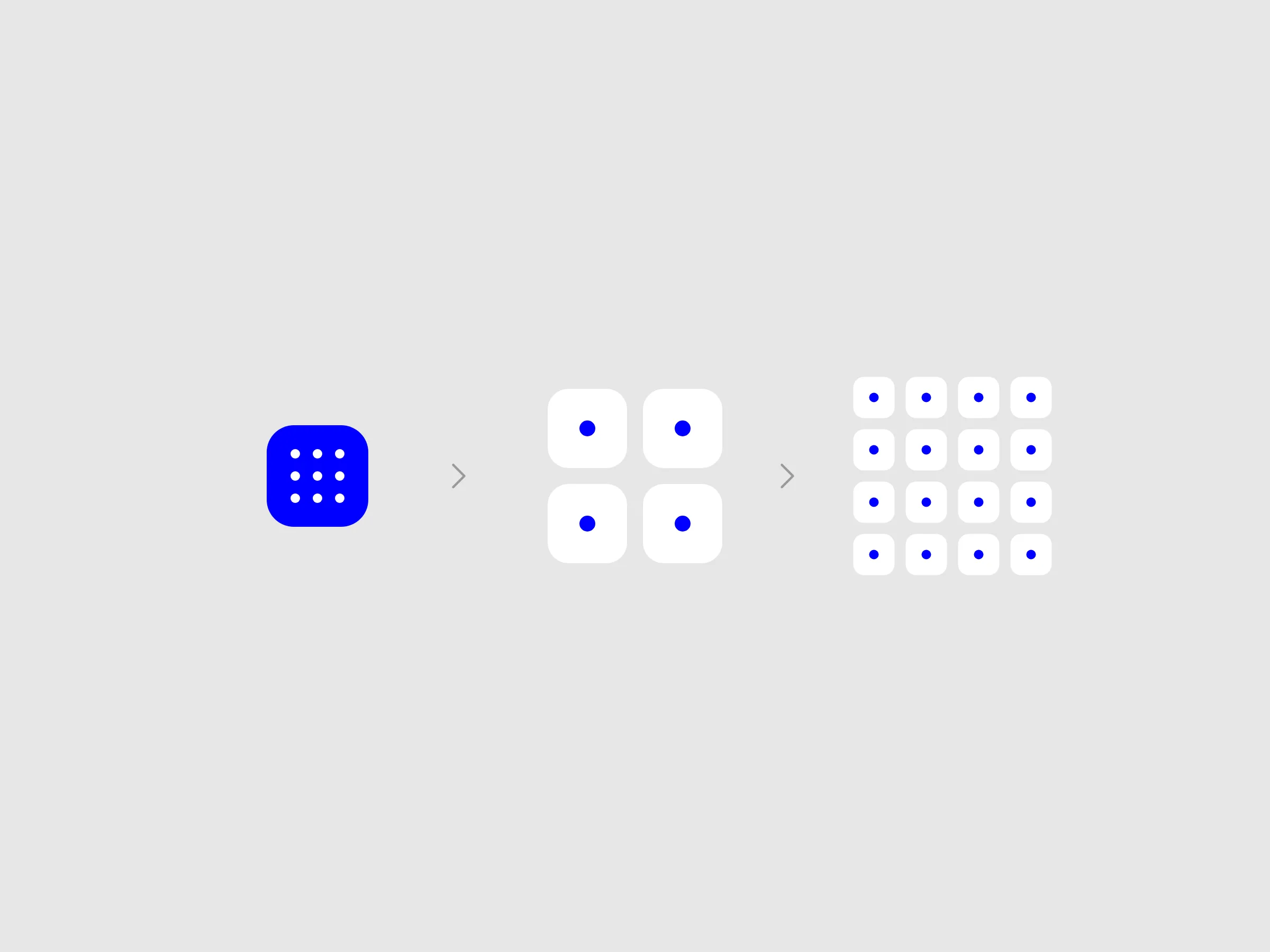
Do not size it by headcount alone. Size it by three things: where the knowledge lives, which processes it must run, and how deep into your service it goes.
Data: what does the company know, and where is it now? For most smaller companies this is the biggest gap and where a Company Brain does the most immediate work. Not data as in database tables, but knowledge: client rules, price exceptions, how decisions are made. The answer is usually “in the heads of two or three people who have been here longest.” Start there. A 30-person firm may need only a handful of interviews. A 150-person firm may need one per team.
Processes: which work should it support first? This is where the return shows up first. When the brain holds the real process for handling a return, approving a budget exception or qualifying a lead (not the handbook version, but the one people use on a Tuesday), AI agents and assistants can follow it without asking someone. Pick the one or two processes that repeat most and cost the most hours. For help choosing, see which AI use cases to do first.
Product: does it feed how you deliver your service? This is where the advantage builds. A company that runs its core service on its Company Brain finds the system gets sharper with every project, decision and correction. A model update cannot erase that. A new hire cannot copy it in their first month.
| Company size | Where knowledge usually sits | Sensible first scope |
|---|---|---|
| 20–50 people | The owner and two or three senior people | One brain for the whole company; one or two agents on the most repeated task |
| 50–100 people | Team leads, plus a few long-serving specialists | Whole company, with access rights by team; agents for the two or three costliest tasks |
| 100–200 people | Spread across departments and systems | Whole company, mapped team by team; clear access rules from day one; agents added per department |
The rows are a starting guide, not a rule. A 40-person firm with many client-specific rules can need more mapping than a 120-person firm with simple, repeated work. Access rights matter more as you grow: see how to keep permissions right in a Company Brain.
What does it take with a partner like Superstate?
Superstate builds Company Brains and the AI agents on top of them for exactly this kind of company: marketing agencies, accounting firms, recruiting agencies, logistics companies, real estate agencies and others, in Bulgaria and abroad.
The work starts with a free mapping. It begins with a sixty-minute meeting with you and your leadership. Then Superstate talks to your key people, looks at the tools you already use and follows a few real jobs from start to finish. You get the map of how the company really works, with the repeated tasks ranked by what they cost, and a written offer for the first steps. You pay only if you say yes.
The brain built on that map captures what the company already says and writes (meetings, calls, chats, emails, documents) the same day, with the date. It sorts everything into plain pages that keep themselves up to date, so nobody on your team has to maintain it. Every answer shows the page it came from, and if something is wrong, you correct it and the brain remembers. It runs on its own server for your company, and if you leave, you keep everything.
Then come the agents, starting with the one or two that save the most time. One client, the accounting firm Saldo BG, used to type every invoice by hand for two hundred clients. Now, in the words of Mariela Ilieva, “the AI reads it and matches it to the bank, and we check it. The month closes without the panic.” You see the first result running in weeks, not a plan in months.
Start with the question, not the tool
The entry point for a Company Brain in a smaller company is not a software trial. It is a conversation about what the company knows that is not written down anywhere.
The enterprises that get Company Brains right had their documentation culture in place before the brain was built. Smaller companies can build the brain and the documentation habit together, but only if capture comes first. Starting with a tool when nothing has been captured is the enterprise playbook, and it was never designed for a business your size.
Frequently asked questions
Does a small business need a Company Brain?
A company of 20 to 200 people needs one when its AI tools give generic answers, when new hires learn the job by asking around, or when one person leaving would take key knowledge with them. Below about 20 people, the owner often still holds everything, and a few good documents may be enough.
Do we need clean documentation before we build a Company Brain?
No. In most smaller companies the knowledge was never written down, so the build starts with capture. A mapping phase draws out what people know: how decisions are made, which exceptions apply, and how work really moves. What you need is leadership time and honesty about how things are actually done.
Why doesn’t an enterprise Company Brain tool work for a small company?
Most enterprise knowledge tools connect to documentation that already exists and make it easier to search. Large companies with strong writing cultures have that documentation. Most small and mid-sized companies do not. Pointing a search tool at a few stale pages and a busy chat workspace gives you search on top of gaps.
Who should own the Company Brain in a 50-person company?
One leader should own it, usually the owner, the COO or the head of operations. That person decides what goes in, who sees what, and settles conflicts. They should not have to maintain it by hand. Choose an approach where the system captures and updates itself, and people only correct it.
How long does it take to get a Company Brain running in a small business?
The first step is a mapping session of about an hour with leadership, then short talks with the people who do the work. With a partner such as Superstate, you see the first result running in weeks, not months. The brain then grows as the business uses it and corrects it.

Want to know more about what we do? Visit the Superstate website.