AI Transformation vs Digital Transformation: The Real Difference
AI transformation redesigns how businesses operate — digital transformation digitized what existed. Learn the critical differences and what to do next.

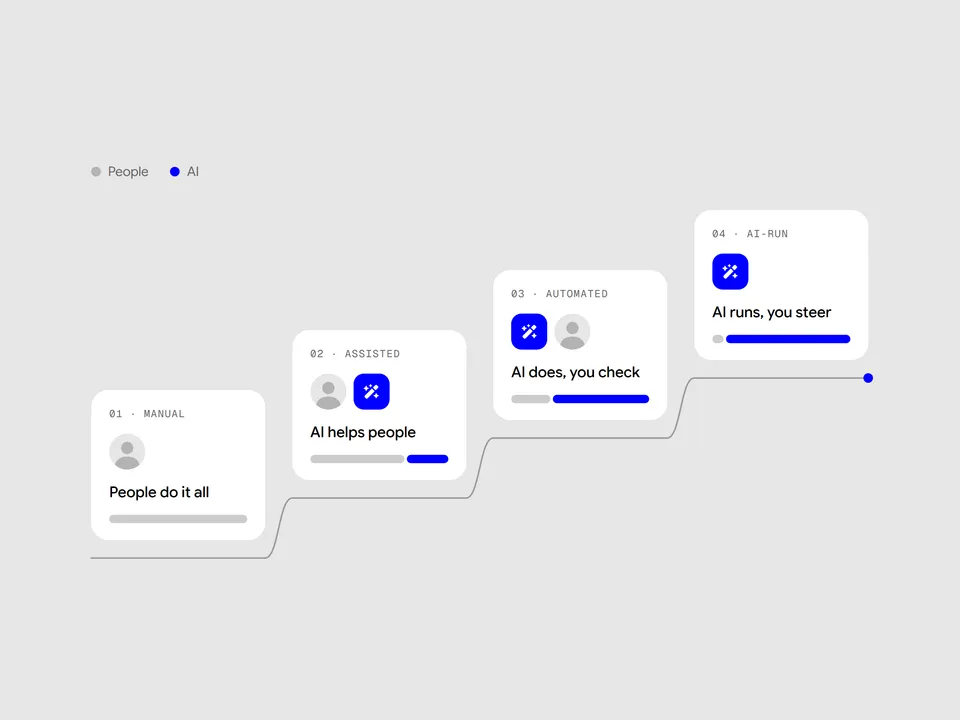
Table of Contents
- What did digital transformation actually do?
- What does AI transformation actually mean?
- How do AI and digital transformation differ?
- Why do digital transformation veterans struggle with AI?
- Where does AI redesign a business: product, process, data?
- What is the organizational shift nobody talks about?
- Expert insight
- What should you do Monday morning?
- Frequently asked questions
The numbers show the gap. McKinsey’s State of AI survey found that 88% of respondents use AI in at least one business function, but only 39% report any EBIT impact at the enterprise level. Only about 6% qualify as “high performers” who see EBIT impact of 5% or more. For the wider picture, see the AI maturity model and why AI projects fail.
What did digital transformation actually do?
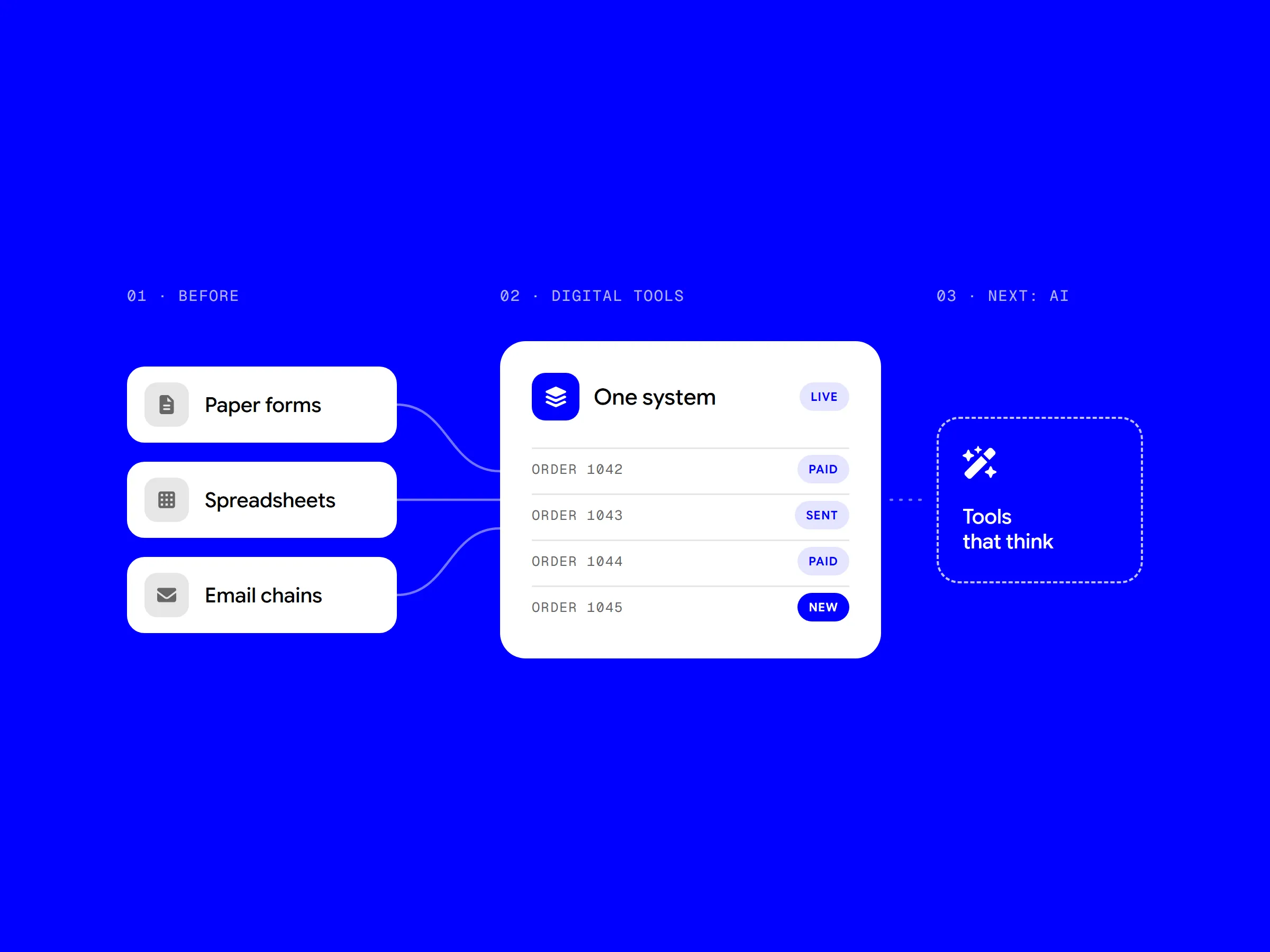
Digital transformation took analog processes and made them digital. Paper invoices became PDFs. Filing cabinets became databases. Phone calls became chat messages. The work stayed the same, and the medium changed.
For most companies it meant buying software: CRMs, ERPs, project management tools, cloud storage. It also laid groundwork for AI, because AI needs digital data and digital processes to work with.
But digital transformation had a ceiling. It made existing processes faster, cheaper, and easier to track. It did not ask whether those processes should exist.
For example, picture a 200-person logistics company that digitized its dispatch system, moving from whiteboards to software. Updates are faster, errors are fewer, and tracking is live. That is a real improvement. But the basic question, how trucks get assigned to routes, stayed the same. A human still looked at data and made the decision.
That ceiling is where AI transformation begins.
What does AI transformation actually mean?
AI transformation starts where digital transformation stops: at the design of the work itself.
In the same example, an AI-transformed logistics company would not just digitize dispatch. An AI system would weigh traffic, delivery windows, driver availability, fuel costs, and customer priority together and propose routes. The dispatcher’s job would shift from “assign trucks to routes” to “handle the exceptions the system flags.”
Harvard Business Review reported in April 2026 that many companies are stuck in a “micro-productivity trap”: task-level AI gains that never turn into business results. Digital transformation trained a generation of executives to think in tool upgrades. AI transformation needs a different kind of thinking.
How do AI and digital transformation differ?
| Dimension | Digital transformation | AI transformation |
|---|---|---|
| Core question | ”How do we digitize this process?" | "Should this process exist in its current form?” |
| What changes | Tools and medium (analog to digital) | Business logic and decision-making |
| Scope | Department-level software adoption | Cross-functional workflow redesign |
| Timeline | A program with a finish line | A continuing shift in how the business operates |
| Success metric | Adoption rate, cost savings | Revenue impact, depth of workflow redesign |
| Failure mode | Poor execution or change management | Applying AI to old frameworks |
| Who leads | CIO / IT department | CEO and cross-functional leadership |
| Relationship to existing processes | Preserves and improves them | Challenges and often removes them |
This table is our reading, not survey data. The last row matters most. Digital transformation is conservative: it takes what exists and makes it digital. AI transformation is creative: it asks what should exist, given what AI can do.
Why do digital transformation veterans struggle with AI?
Companies that executed strong digital transformations can have the hardest time with AI. They spent years building rigid, optimized systems. Every workflow is documented, automated, and measured. Changing those systems feels like tearing down a building they just finished.
Deloitte’s survey of 3,235 leaders shows the split. Of surveyed organizations, 34% are starting to use AI to deeply transform, by creating new products and services or reinventing core processes. Another 30% are redesigning key processes around AI. The remaining 37% use AI at a surface level, with little or no change to existing processes.
It is plausible, though not proven by that survey, that the surface-level group includes many firms that treat AI as the next phase of their digital roadmap. They judge AI tools the way they judged SaaS products: feature checklists, vendor comparisons, pilots. Then they bolt AI onto a process designed before large language models existed and wonder why the return is flat.
McKinsey found that high performers are nearly three times as likely as others to say they have fundamentally redesigned individual workflows. The pattern is clear: returns come from redesign, not from adoption alone.
Where does AI redesign a business: product, process, data?

Three areas show the difference. The examples below are illustrative.
Product: embed AI in what you sell
Digital transformation changed how companies delivered what they sold. AI transformation can change the product. For example, picture a financial advisory firm that digitized client reporting. With AI it could generate personalized insights for each client in real time. The product, the value proposition, and the pricing model all change.
Process: redesign how work gets done
This is where most companies start, and where most get stuck. The trap is automating existing steps instead of redesigning the workflow. Picture an accounting firm that uses AI to extract data from invoices faster. That is surface-level. A deeper change would redesign accounts payable so that AI handles matching, approval routing, exception detection, and vendor communication.
Data: make information a living asset
Digital transformation created data lakes. AI transformation makes them useful: unified data that triggers workflows, not static dashboards that people check once a week. If your data is not ready, read AI-ready data for SMBs.
What is the organizational shift nobody talks about?
IBM’s May 2026 CEO study found that CEOs are reshaping C-suite roles for the AI era. Between 2026 and 2028, they expect 29% of employees to need reskilling for a different role and 53% to need upskilling for their current role.
Digital transformation needed change management. AI transformation needs organizational redesign. The difference is like retraining someone on new software versus redefining what their job is.
Off-the-shelf SaaS tools solve isolated problems and force businesses to adapt their processes to the tool. A report that diagnoses gaps does not fix them. AI transformation needs someone who maps how the company works, builds, and stays to keep it running as AI changes.
Expert insight
“Every week, a CEO tells me they’ve ‘done AI’ because they bought a few licenses and ran a pilot,” says Anton Tsenov, CEO of Superstate. “That’s digital transformation thinking applied to an AI problem. The companies pulling ahead aren’t asking ‘which AI tool should we buy?’ They’re asking ‘what would this business look like if we designed it from scratch today, knowing what AI can do?’ That second question is uncomfortable. It’s also the only one that matters.”
What should you do Monday morning?
Stop evaluating AI tools. Start mapping workflows.
Pick the three processes that consume the most time in your organization. For each one, answer two questions. First, if this process did not exist and you had to design it from scratch with AI, what would it look like? Second, how different is that from what you run today?
If the answer to the second question is “very different,” that is where AI transformation begins. Not with a vendor demo or a pilot, but with an honest look at the gap between what you have and what is now possible. Then pick where to start with AI use case prioritization. Superstate does the mapping step for free: you keep the map and pay only if you say yes to the offer.
Frequently asked questions
What is the difference between AI transformation and digital transformation?
Digital transformation moves existing processes from analog to digital. AI transformation redesigns how work is done and decided. Digital transformation asks “how do we digitize this?” AI transformation asks “should this process exist in its current form?”
Is digital transformation required before AI transformation?
Partly. AI needs digital data and digital processes, so some baseline digitization is necessary. But a company does not need to finish a digital program first. The goal is digital data and core workflows without locking into rigid systems that resist redesign.
Why do most AI initiatives fail to pay off?
McKinsey’s survey found that only about 6% of respondents are high performers with EBIT impact of 5% or more. Deloitte found that 37% of surveyed organizations use AI at a surface level with little or no change to existing processes. Bolting AI onto old workflows rarely pays off.
What should a company do first for AI transformation?
Map the core workflows and ask which ones should be redesigned, not automated as they are. Then rank the candidates and start with the one that can show value fastest.

Want to know more about what we do? Visit the Superstate website.