Why New Hires and AI Agents Fail the Same Way
New hires and AI agents fail the same way: the knowledge they need is in people's heads. How a Company Brain fixes both.

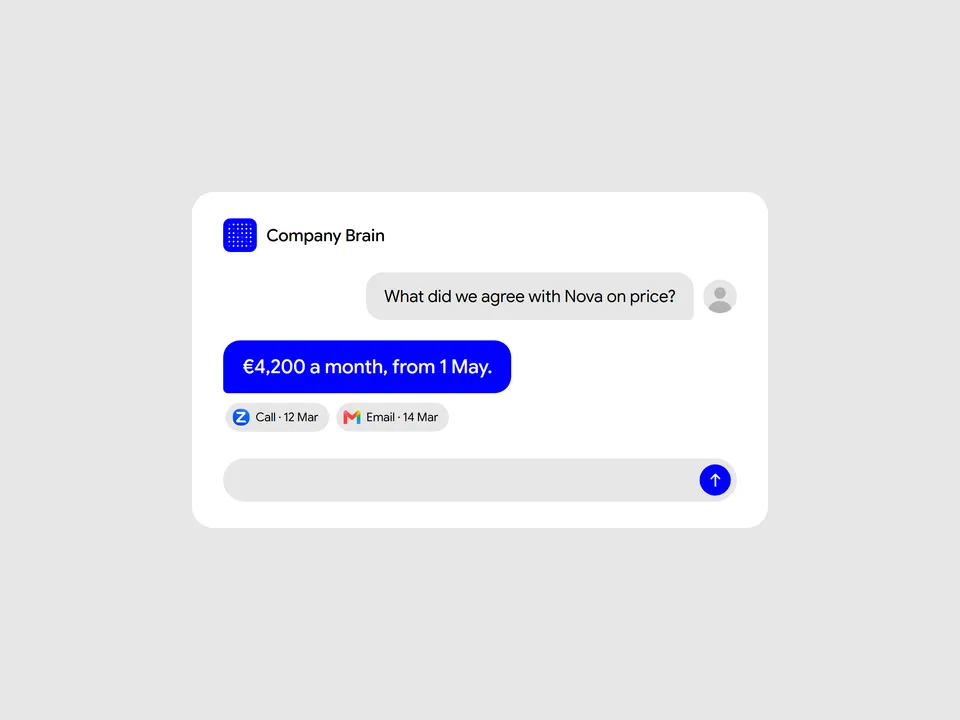
Table of Contents
- Why Do New Hires Take So Long to Get Fully Productive?
- What Is the Knowledge New Hires Are Actually Looking For?
- Why Your AI Agent Has the Same Problem — and Never Grows Out of It
- The Day-One Tax: What Companies Pay When Nothing Is Captured
- What Changes When a Company Brain Exists From Day One
- Frequently asked questions
For example, picture a 45-person services firm that hires a project coordinator. On her third day a client asks for a scope addition that falls between two pricing tiers. The handbook is not specific enough. Her manager gives a general principle, and a senior colleague gives a different number. A Slack search finds a thread from 2021 that nobody can confirm is still in force. She makes her best guess, and it is wrong.
Now give the firm an AI assistant for project queries. It searches the same fragmented records and returns a confident, detailed answer that is also wrong. One human and one piece of software failed for the same reason: neither had access to how the company actually works. The human would eventually figure it out. The software would not. (This is an illustration, not a real case.)
Why Do New Hires Take So Long to Get Fully Productive?
The blunt answer: because the knowledge they need doesn’t exist anywhere they can find it.
Gallup says new employees typically take around 12 months to reach peak performance potential (Gallup). Structured onboarding can shorten that, but it is the exception. Most companies rely on what could be called the shadow curriculum: an unspoken, undocumented process where new employees slowly assemble a mental map of how things work by finding the right people and asking the right questions.
This is not inefficiency on the new hire’s part. It’s a rational response to an absence. Most companies have never codified how they actually operate. They have job descriptions, org charts, and employee handbooks. What they don’t have is a record of how pricing exceptions get decided in practice, which client communication rules differ by account manager, why the standard process has a carve-out that nobody ever wrote down, or what the workaround is when the legacy system does that one thing.
So new hires learn it the hard way. They identify the real decision-makers — who may not appear on any org chart. They build a network of who-knows-what. They develop a feel for which Slack threads are authoritative and which handbook entries are aspirational. A full quarter often passes before they stop making avoidable errors. Two quarters before they’re reliably calibrated.
For a growing company, that is an expensive course load. The cost is real but hard to see: lost output during ramp-up, spread across every budget cycle, with no single line item to blame. Panopto’s study of knowledge-sharing puts the broader cost at $47 million a year for a large U.S. business (HR Dive). It is a vendor study, so read it as indicative.
What Is the Knowledge New Hires Are Actually Looking For?
New hires can access documented knowledge from day one. The problem is that documented knowledge and actual knowledge diverge in dozens of places by the time any company is more than a year old.
The pricing exception policy in the handbook was written in 2020. The team quietly developed a different practice since then — not officially, just through repetition. The escalation process in the wiki has a step that nobody follows because there’s a faster informal route. The client delivery standard says one thing; the working standard negotiated by the team over time says another. The person who drove each of those adaptations knows the real version. Everyone else finds out eventually, usually through a mistake.
Much of what a company knows is tacit: the workarounds, exception-handling routines, and tribal knowledge that surface only when needed. No documentation audit finds it, and no wiki covers it. A new hire can only find it by asking the right people, which first requires knowing who those people are. See the tribal knowledge problem for why this knowledge disappears.
The shadow curriculum is the substitute most companies have accidentally built for a Company Brain they never created.
Why Your AI Agent Has the Same Problem — and Never Grows Out of It
A new hire’s day-one problem gets better. Six months in, they know the workarounds. They know which document is outdated and which rule has a dozen exceptions their manager never mentioned. Their understanding of how the company operates has been calibrated through months of experience.
A Company Brain gives your AI agents what your new hire eventually builds — available from the first query.
Without one, the AI agent is working from the same stale documents the new hire read in week one. It finds the 2020 pricing policy. It reads the escalation process nobody follows. It returns an answer — detailed, confident, and calibrated to a version of the company that no longer exists. The gap between what the AI can access and how the business operates today is context drift; see why AI agents give wrong answers over time.
The agent never graduates from day one the way a human hire does. It doesn’t build a network of who-knows-what. It doesn’t learn from a correction. It doesn’t develop a feel for which sources to trust. Every time it’s queried, it starts from the same incomplete foundation.
This is not a model problem. Foundation models from leading AI providers are genuinely capable systems. The capability is not the constraint. Company-specific context is — and no model, however capable, can supply context it was never given.
The Day-One Tax: What Companies Pay When Nothing Is Captured
The compound effect of permanent day-one mode runs across both human and AI channels. The table below is illustrative, not measured.
| Scenario | Without a Company Brain | With a Company Brain |
|---|---|---|
| New hire, week 1 | Asks five people, gets four answers | Queries the actual process on day one |
| New hire, month 3 | Still mapping who-knows-what | Contributing since week two |
| New hire, month 12 | Finally calibrated | Has been adding to the system for months |
| AI agent query | Confident answer from outdated context | Accurate answer from live business logic |
| Employee departs | Their knowledge walks out with them | Knowledge stays in the system |
| New AI tool deployed | Zero company context on day one | Full operational context available immediately |
The scale dimension compounds this further. At ten people, the founder carries most of the company’s working knowledge and is accessible to everyone. At fifty people, that knowledge has distributed across a dozen heads — not evenly, not predictably. At 150 people, many of the original context-holders have left. The new hire at a company of this size is assembling a puzzle where several pieces were removed by people who left last year.
A Company Brain is not an onboarding program, but it provides the knowledge infrastructure any real onboarding program needs. Without it, even a well-structured orientation hits a ceiling at “here is how we officially say things work.” The rest takes months of supplementary learning.
What Changes When a Company Brain Exists From Day One
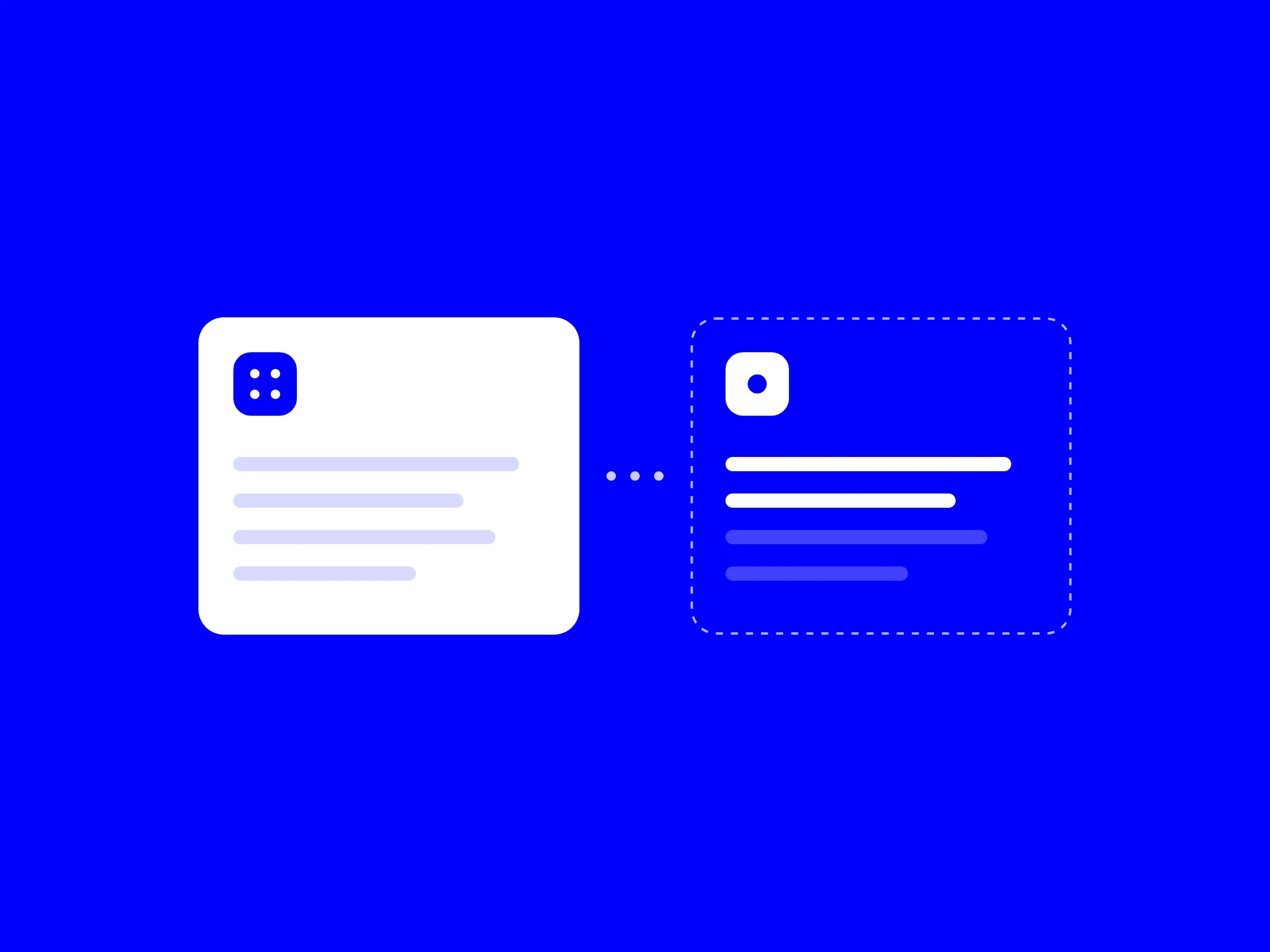
Two versions of the illustrative coordinator’s third day.
Without a Company Brain: An unusual client request arrives. She checks documents, asks three people, gets conflicting answers, and makes a guess. Hours of uncertainty, and a wrong answer.
With a Company Brain: She queries the company’s decision record. The answer includes not just the rule but the reason it exists — and the two documented exceptions. She gives the client an accurate answer quickly. No need to find the right person. The knowledge was already in the system.
Now replay that for the AI agent. Without a Company Brain, the agent scans available documentation and returns the outdated answer. With one, the agent has access to the same living knowledge base the human coordinator does — including the exceptions, the context, and when the rule was last updated. Both agents answer correctly. Neither had to spend months building context.
The shadow curriculum disappears. People still need to understand culture, relationships, and role-specific judgment. What the Company Brain eliminates is the months-long hunt for knowledge that should have been in a system from the start.
Building the first version takes far less time than a shadow curriculum. At Superstate, the work starts with a free mapping of how your company runs, which begins with a sixty-minute meeting. Read how to build a Company Brain for the steps, and what you lose when people leave for the other side of the problem. This article is part of our series on organizational memory.
The question isn’t whether a Company Brain will eventually become standard infrastructure for a growing business. The question is how many more people — human and AI — a company sends through the shadow curriculum before it builds one.
Frequently asked questions
Why do new hires take so long to get fully productive?
Most company knowledge is never written down. New hires can read documented processes immediately but spend months uncovering the real ones: the workarounds, exceptions, and informal rules. Gallup says new employees typically take around 12 months to reach peak performance potential. The knowledge exists, but it lives in people’s heads, not in a queryable system.
What is the difference between an onboarding document and a Company Brain?
An onboarding document describes how processes are supposed to work. A Company Brain captures how they actually work, including the exceptions, the informal rules, and the decisions made over time. An onboarding document goes stale when the business changes. A Company Brain is kept current, so new hires and AI agents can query it on day one.
Why does my AI assistant give wrong answers about our company’s own processes?
AI assistants work from the information they can access, usually documentation that was accurate when written but has not kept pace with the business. Without a Company Brain, the AI works from context that never updates. The model may be capable; the company-specific context is what is missing.
What is tacit knowledge and why does it slow down new hire onboarding?
Tacit knowledge is the knowledge that lives in people’s heads rather than in a document: the workarounds, exception-handling logic, and informal rules teams develop over time. New hires spend months uncovering it by asking the right people. A Company Brain is designed to make that knowledge explicit and queryable.
How do companies avoid losing institutional knowledge when employees leave?
By keeping a living, queryable record of how the business operates. Documentation goes stale, a wiki goes unmaintained, and tribal memory leaves with people. A Company Brain is updated as the business changes, so institutional knowledge stays in the system when someone departs.

Want to know more about what we do? Visit the Superstate website.